Tulip Trivia Β· Surprising & Delightful

🌷

Fun Facts About Tulips You Probably Didn't Know

Behind their simple beauty lies a world of fascinating history, science, culture, and the occasional financial catastrophe.

25 Surprising
Tulip Facts
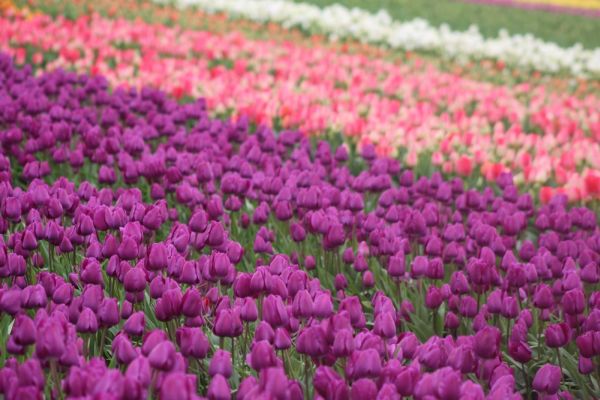
Stunning tulip field in bloom
🌍 From Central Asia
to the World

Tulips are one of the most popular flowers in the world β€” but there's so much more to them than meets the eye. From ancient history to wild economics, prepare to be surprised.

Whether you're a gardener, a flower lover, or just curious β€” these facts will make you see tulips in a whole new way.

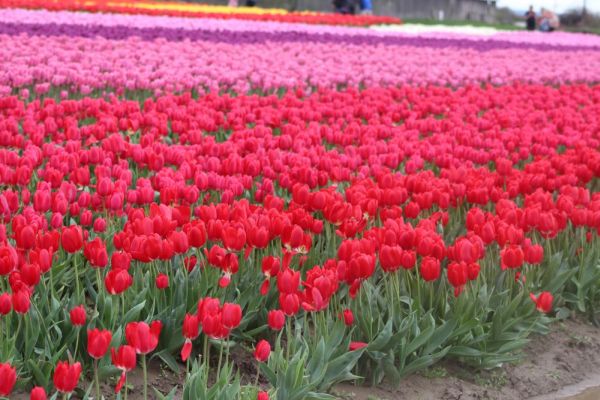
Red tulips
Pink tulips
Purple tulips
Yellow tulips
Blue tulips
1630s
Peak of Tulip Mania
"At the height of the craze, a single rare bulb sold for ten times the annual salary of a skilled craftsman."
3B+
Bulbs produced by the Netherlands annually

More Surprising Tulip Truths

Science, biology, culture, and plenty of wonder.

🎨
Fact 04
Tulips Come in Almost Every Color β€” Except One

Tulips exist in virtually every color in the rainbow β€” red, pink, purple, yellow, orange, white, near-black, and even multi-toned. But there is one notable exception: true blue tulips do not naturally exist. Breeders have tried for centuries, and "blue" varieties are actually deep purples.

❌ No true blue tulip has ever been bred
πŸ“
Fact 05
They Keep Growing After Being Cut

Unlike most flowers, tulips continue to grow even after they've been snipped and placed in a vase. They can grow up to 1 inch or more β€” and will famously bend toward any nearby light source.

↑ Up to 1 inch of growth after cutting
🌞
Fact 06
Tulips Follow the Sun

Tulip flowers open during the day and close at night. This light-triggered movement is called nyctinasty β€” a rhythmic response to changes in temperature and light that protects the flower's reproductive parts.

πŸ”¬ Called "nyctinasty" by scientists
Striped tulips caused by virus
🧬
Fact 07
Striped Tulips Were Caused by a Virus

The famously beautiful "broken" tulips with striking streaks and flame-like patterns that drove Tulip Mania to its peak were not a design achievement β€” they were caused by a mosaic virus spread by aphids. The virus disrupted normal pigment distribution in petals, creating irregular patterns that couldn't be reliably replicated. This made them extraordinarily rare and therefore extraordinarily valuable. Modern horticulture has since bred patterned tulips without the virus.

🦠 A virus made these flowers worth a fortune
πŸ₯—
Fact 09
Tulip Petals Are Edible

Yes β€” you can eat tulips! Petals are used in salads and as garnishes, with a mild, slightly sweet flavor. During WWII, Dutch citizens ate tulip bulbs to survive. Only consume chemical-free, unsprayed flowers.

❄️
Fact 10
Tulips Need Cold to Bloom

Tulips require a cold period called vernalization β€” typically 12–16 weeks below 45Β°F β€” to bloom properly. Without a real winter, they won't flower well. Gardeners in warm climates refrigerate bulbs to simulate this.

🌱
Fact 11
Grow from Bulbs, Not Seeds

Tulips propagate primarily via underground bulbs β€” compact energy stores that power each new bloom. New daughter bulbs form each season around the parent, gradually spreading the plant naturally through the garden.

🐿️
Fact 12
Animals Love Eating the Bulbs

Squirrels, deer, rabbits, and even voles find tulip bulbs irresistible. Gardeners often plant bulbs in wire mesh cages or use deterrents like blood meal and hot pepper to protect their investment from hungry wildlife.

🌿
Facts 13 & 14
First Sign of Spring β€” and Some Come Back Every Year

Tulips are among the very first flowers to bloom in spring, making them a universal symbol of winter's end. While many are planted as annuals, certain varieties β€” especially Darwin Hybrids β€” are reliably perennial, returning year after year under the right conditions.

🌸 Darwin Hybrids can rebloom for 5+ years
πŸŒ€
Fact 15
They Change Shape Over Time

As tulips age in a vase, their stems curve and petals open wide, creating a loose, graceful, and highly photogenic silhouette. What starts as a tight bud becomes a relaxed, painterly bloom.

πŸ‡³πŸ‡±
Fact 16
Netherlands Produces 3 Billion Bulbs a Year

The Netherlands supplies around 80% of all tulip bulbs worldwide β€” exporting over 3 billion bulbs each year to gardens, greenhouses, and floral markets across the globe. It's a staggering agricultural feat.

Tulips cultural significance worldwide
🎭
Fact 17
Tulips Have Deep Cultural Significance Worldwide

Tulips hold a place of honor in cultures far beyond the Netherlands. In Turkey, the tulip is a national symbol β€” the tulip era (Lale Devri) of the Ottoman Empire in the 18th century was named after the flower. In Persian poetry, the tulip symbolizes the blood of fallen lovers and martyrs. In the Netherlands, tulips represent Dutch national identity and are the country's most valuable export crop. Their cultural reach is truly global.

🌍 Turkish · Dutch · Persian · South Asian traditions all revere the tulip
Red tulip rows
Pink tulips
Purple tulips
Yellow tulips
Blue tulips
Red tulip close
Pink tulip field

What Each Tulip Color Means

Colors carry centuries of symbolism β€” here's what to give (and when).

Red tulips meaning
Red Tulips
Deep love & passion. The most romantic tulip β€” a classic declaration of true love.
Pink tulips meaning
Pink Tulips
Care, affection & good wishes. Perfect for birthdays, get-well, and celebrations of friendship.
Purple tulips meaning
Purple Tulips
Royalty, elegance & admiration. A flower fit for those you hold in highest regard.
Yellow tulips meaning
Yellow Tulips
Once meant jealousy β€” now represents sunshine, happiness & cheerful thoughts. (Fact #22!)
Blue tulips meaning
Blue / White Tulips
Purity, peace & tranquility. White tulips also signal new beginnings β€” perfect for weddings.
Tulip symbolism love spring renewal

Biology, Symbolism & Everyday Wonders

The final facts are just as delightful as the first.

🌸
Symbol of Love & New Beginnings (Fact 8)
Universally associated with love, renewal, and spring β€” that's why tulips are so popular for weddings, anniversaries, and gifts marking fresh starts.
πŸŒ™
Tulips "Sleep" at Night (Fact 18)
Their petals close in darkness and reopen with the light each morning β€” a gentle, daily reminder that even flowers need rest.
🏑
Can Be Grown Indoors (Fact 21)
With proper chilling of bulbs and a bright windowsill, tulips can bloom beautifully inside your home β€” bringing spring indoors in the depths of winter.
🎁
One of the Most Gifted Flowers (Fact 23)
Tulips are among the top three most gifted flowers worldwide for birthdays, anniversaries, and celebrations β€” second only to roses in many markets.
🌍
Universal Sign of Spring (Fact 25)
Across every culture and continent, tulips carry the same message: winter is over, warmth is here, and the world is beginning again. Few flowers can claim such universal symbolism.

5 Facts to Remember

The most shareable, unforgettable tulip facts.

🌏
Born in Central Asia
Not the Netherlands β€” tulips came from the wild steppes of Central Asia via Ottoman Turkey.
πŸ’°
Once Worth More Than Houses
Tulip Mania in the 1630s was history's first great speculative financial bubble.
🌈
3,000+ Varieties
Over 3,000 registered varieties in 15 groups β€” but no true blue exists in nature.
πŸ“
They Keep Growing
Cut tulips continue growing in the vase β€” up to 1 inch or more after cutting.
🌞
They Follow Light
Tulips open during the day and close at night β€” a movement called nyctinasty.

Tulip FAQ

What is special about tulips?
Tulips are unique for their rich history (once worth more than gold), their remarkable biology (they keep growing after cutting, follow the sun, and need cold to bloom), and their extraordinary cultural significance across dozens of civilizations over thousands of years.
Are tulips rare?
Today tulips are widely available β€” but certain varieties remain rare and prized. Historically, specific patterned "broken" tulips caused by a mosaic virus were extraordinarily scarce, fueling the infamous Tulip Mania speculation bubble of the 1630s.
Why are tulips so popular worldwide?
Their beauty is clean and elegant, their symbolism is universal (love, spring, renewal), they come in nearly every color imaginable, and they're easy to grow. They're also versatile β€” equally at home in a grand garden, a field of millions, or a single vase on a windowsill.
Do tulips really grow after being cut?
Yes β€” this is one of the most surprising facts about tulips. Unlike most cut flowers, tulips continue to grow in the vase, sometimes by an inch or more. They also bend and curve toward light sources, which can create beautiful, organic arrangements over time.