Photography Guide · Tips, Settings & Shots
📷From golden hour light to low-angle drama — master the art of tulip field photography with expert tips for every camera and skill level.
Tulip fields offer a dream setting for photographers — but capturing their true beauty takes more than just pointing and shooting. The right light, angle, and settings make all the difference.
Whether you're using a smartphone or a professional DSLR, these techniques will transform your tulip shots from ordinary to extraordinary.
From lighting and composition to angles and editing — your complete field guide.
Lighting is everything in photography. The soft, directional warmth of sunrise and sunset transforms tulip fields — long shadows create depth, colors saturate beautifully, and the scene takes on an almost painterly glow. Avoid harsh midday sun at all costs.
World-class tulip spots: Keukenhof (Netherlands), Skagit Valley (Washington), Michigan festivals. Arrive early to claim prime positions before crowds arrive.
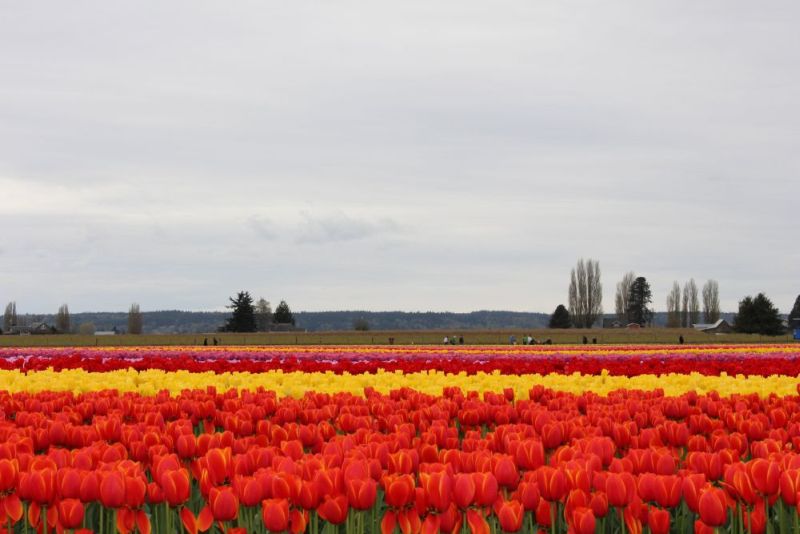
Tulip fields naturally create perfect leading lines — long rows of color that guide the viewer's eye deep into the frame. Position yourself to shoot along these lines for maximum depth and visual impact. The vanishing point creates irresistible perspective.
Kneel or lie down and shoot at flower level. This immersive perspective makes tulips feel towering and majestic, with the field stretching to infinity behind.
Sometimes less is more. Isolate a single bloom with a blurred, dreamy background (bokeh). The result is an intimate, emotional portrait of the flower.
Tulip fields are all about color. Seek out rows where different hues meet — red against yellow, pink against purple — for visually striking, high-impact compositions.
A lone figure in a vast tulip field conveys the sheer scale of the blooms and adds human emotion to the scene — turning a landscape into a story.
Don't leave the field with just one type of shot. Work the location systematically — wide establishing shots, mid-range compositions, tight close-ups, and experimental angles. Each tells a different story about the same blooms.
Post-processing is the final polish. Lift shadows, boost vibrance (not saturation), add clarity, and sharpen selectively. Tools: Lightroom, Snapseed.
You don't need a professional camera — great tulip shots are absolutely possible with your phone.
Even experienced photographers fall into these traps.
Go beyond the obvious and create images that truly stand out.
Run through this before every tulip field session.